The history of Monopoly: from Lizzie Magie to Hasbro
A game where you win by bankrupting everyone else started out as a critique of landlords. Elizabeth "Lizzie" Magie, an American, applied for a patent on a board game called "The Landlord's Game" in 1903, and on January 5, 1904 she was granted US Patent 748,626.

A game about land and tenants
Magie wanted to show how a monopoly on land enriches landlords and impoverishes tenants, and the whole mechanic served that point: whoever owns the land earns from the people who live on it. She drew on the ideas of the economist Henry George, who argued for a land value tax, also known as the "single tax". The game came with two sets of rules. In the first, anti-monopoly set, everyone gains when wealth is created. In the second, the goal is the opposite: to crush your opponents by building monopolies. The second version caught on, and people copied it and passed it along.
Boards named after their own towns
Through the 1910s and 1920s the game spread informally. University students and other communities made their own boards, drew them by hand and named the squares after streets and places in their own towns. There was no single publisher, so rules and names changed from board to board and no version counted as the final one. The core will sound familiar: you buy properties, collect from whoever lands on them and try to own everything you can. The difference is that the board carried the names of your own town.
Atlantic City, Darrow and Parker Brothers
Around 1929 (sources differ, and some say the early 1930s) Ruth Hoskins brought the game to Atlantic City, New Jersey. A group of her Quaker friends there made their own version with the names of local streets, among them Boardwalk and Park Place. Instead of auctions they set fixed prices, so the cost of a street was known in advance and nobody had to haggle for it.
In the early 1930s, during the Great Depression, an unemployed salesman named Charles Darrow learned this version from friends. He made copies and sold them, and in 1935 he sold the game to Parker Brothers as his own invention. Darrow filed his patent application the same year, although the game he sold had already existed for some years. A popular story says Parker Brothers first turned the game down in 1934 over "52 design errors", but that is closer to folklore, so treat it with caution.
Also in 1935 (some sources say 1936) Parker Brothers bought Magie's patent for $500, with no royalties. For decades the official history of the game credited Darrow alone.
Monopoly in the Soviet Union
The Soviet Union never sold Monopoly. On September 17, 1988 the Soviet company "Петропан" began selling a localized analogue called «Менеджер» (Manager), often described as the first Soviet economic board game. Its TV ad is often cited as the first commercial TV ad in the USSR. Since the original never reached the shops, many people met the genre through substitutes, and kids in the post-Soviet space played similar games under names like «Менеджер», «Імперія» and «Бізнесмен».
Monopoly today
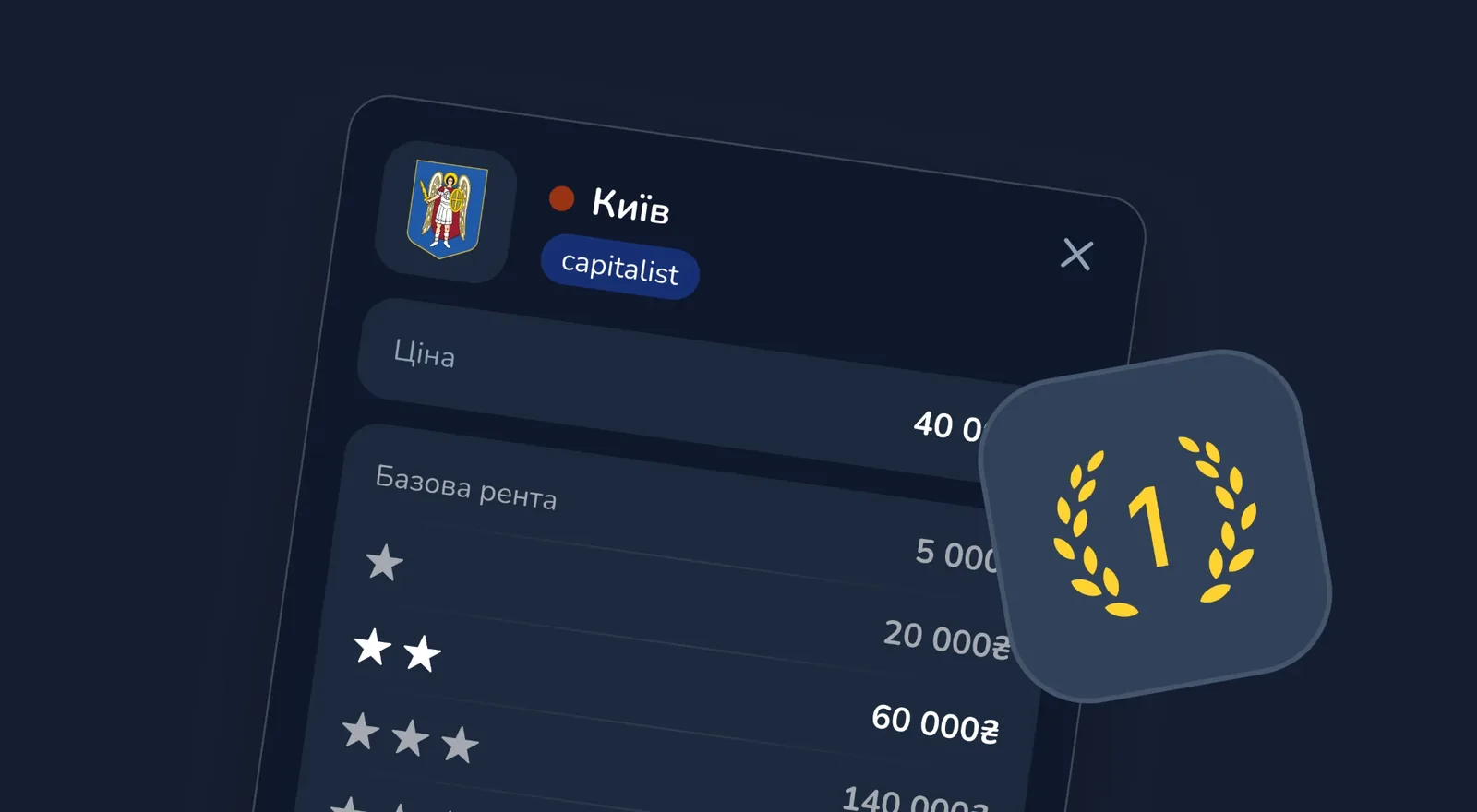
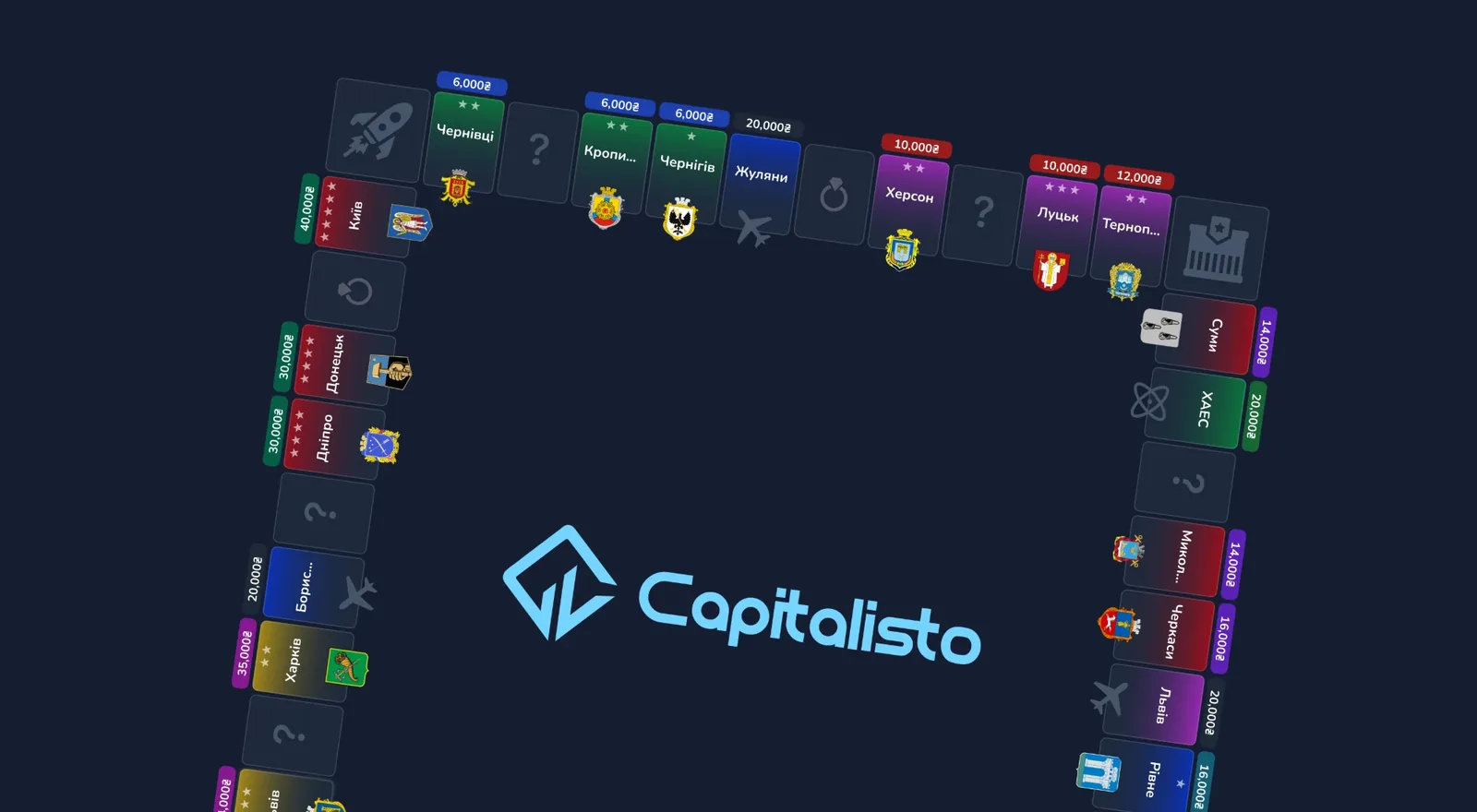
Hasbro acquired Parker Brothers in 1991 through its purchase of Tonka, and Monopoly is a Hasbro brand today. Economic board games are a staple now: many countries and cities have versions with their own maps, and there are online ones too. Capitalisto belongs to this family. It is a Ukrainian online game with Ukrainian cities on the board, free to play in the browser. Monopoly is a trademark of Hasbro, and Capitalisto is a separate, independent game.
Ready to play?
Create a room and invite your friends. It's free.